
MICHEM · Technical guide
How to Dissolve PCE Flakes: A Quality-Control Checklist
Preparing a PCE flake solution starts with the selected grade’s processing instructions. The practical goal is to make a consistent solution at a defined concentration, then confirm that it performs as required in the intended cement, mortar or concrete system.
Redirect to the QC checklist →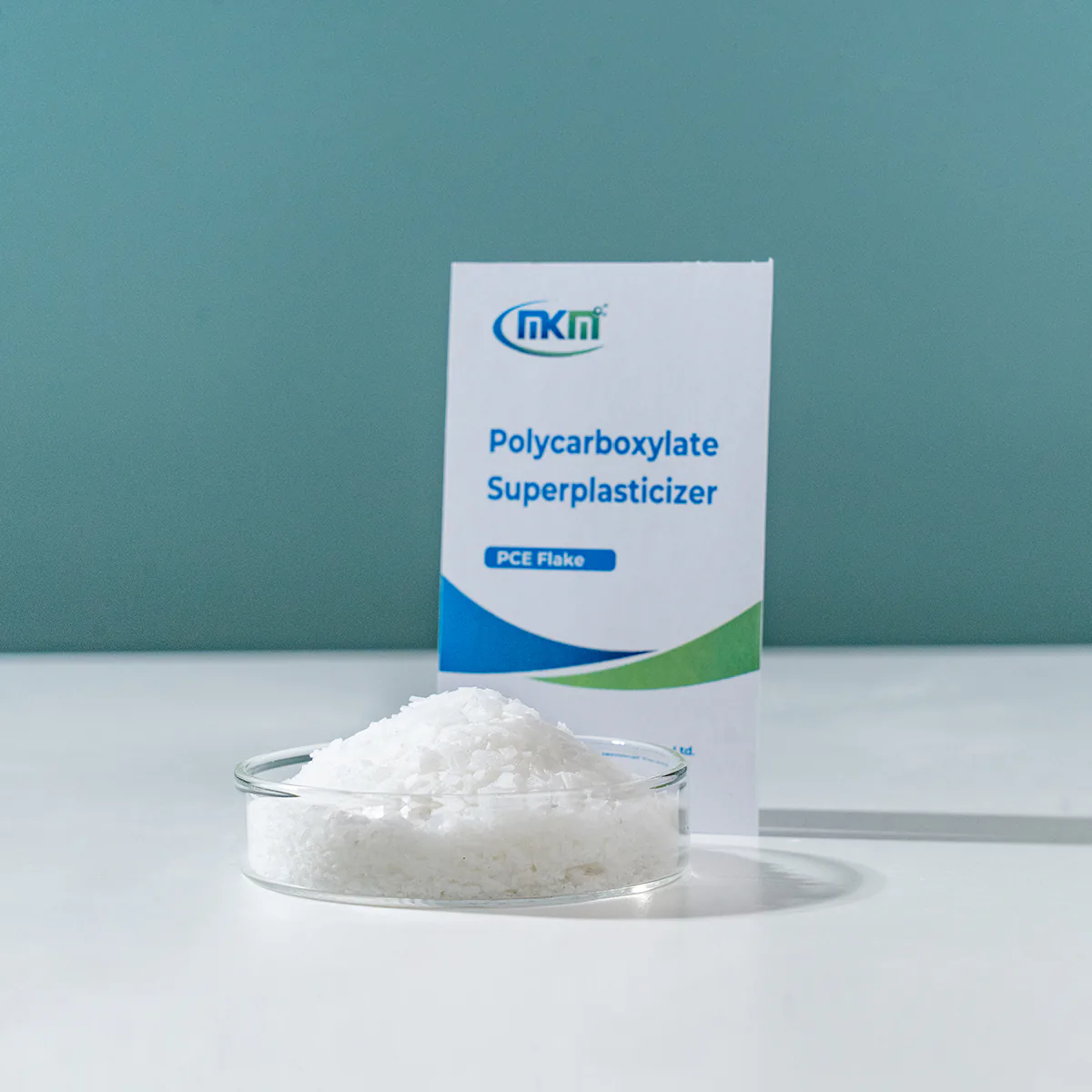
MICHEM supplies polycarboxylate superplasticizer flakes as a solid intermediate for customers developing their own admixture or cementitious-material production process. Preparation conditions depend on the grade, water, concentration and equipment. [1]
This guide proposes checkpoints for a plant procedure. Set the operating conditions and acceptance limits using the current Technical Data Sheet (TDS), supplier processing guidance and trials on your own equipment.
1. Define the Product and Concentration Before Mixing
Start the batch record with the product grade, supplier lot number, preparation date and intended application. Keep the current TDS, Safety Data Sheet (SDS) and Certificate of Analysis (COA) available to the people preparing and checking the batch.
Write down exactly what the target concentration means. A percentage may describe:
- The mass of as-supplied flakes divided by the final solution mass.
- Non-volatile material measured by an agreed test method.
- Active PCE polymer, where that content has been established for the grade.
Use the same basis in the batch calculation, laboratory result and dosing instructions. Report an oven-drying result as the residue or non-volatile content defined by that method; calling it active polymer requires a separately established relationship. ASTM C494/C494M treats residue measurements, composition comparisons and concrete performance as distinct forms of evaluation. [2]
Before preparation, also agree on the water source, equipment, initial water charge, addition sequence, mixing conditions, temperature range, sampling method and criteria for completing dissolution.
2. Follow a Recorded Preparation Procedure
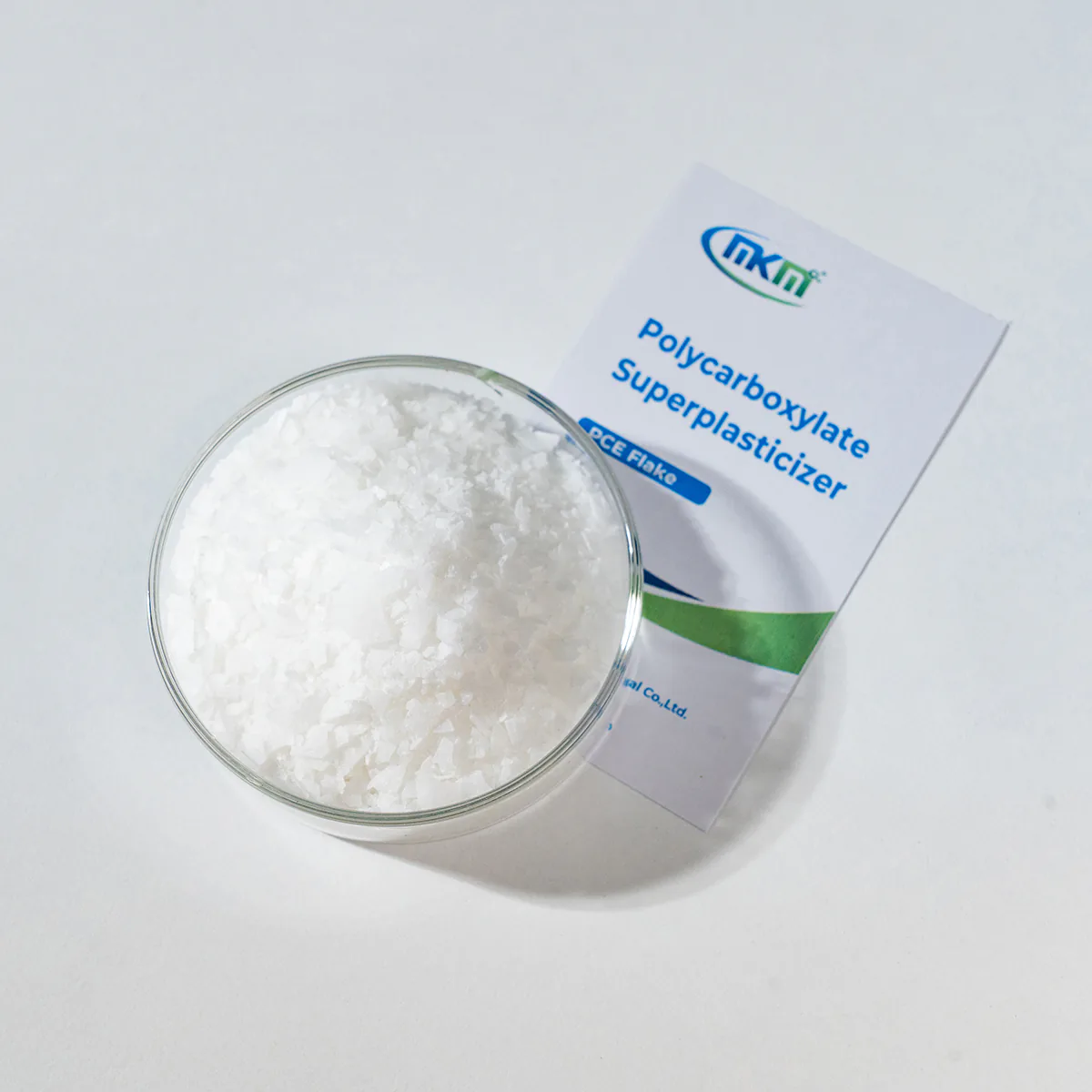
Check the incoming flakes
Confirm that the label and COA match the approved grade and lot. Record packaging damage, unusual caking, visible contamination or other changes from the accepted reference material. Refer abnormal material for review before using it in production.
Prepare the water and equipment
Use the water source and water-quality limits established during qualification. Check that the tank, transfer lines and sampling tools are ready for the batch and free of residues from incompatible previous products.
Record the equipment identification and batch size. During scale-up, verify the mixing arrangement on the production tank; copying a laboratory mixer’s rotational speed alone does not establish equivalent mixing conditions.
Weigh materials and control addition
Weigh the prescribed materials using checked scales. Record the actual quantities, including any water reserved for a later adjustment.
Where the grade instructions specify a water-first process, charge the prescribed initial water quantity, establish the validated mixing conditions and introduce the flakes at the approved feed rate. Follow another sequence when that is the approved route for the selected grade.
Monitor dissolution
Log the addition period, mixing time, solution temperature and observations. Check for persistent flakes, agglomerates or unusual foam using the sampling procedure agreed for the equipment.
Appearance is a useful checkpoint, but it does not establish concentration or tank-wide uniformity. Define the expected appearance against an approved reference, rather than assuming every acceptable solution must be colorless and transparent.
Confirm the final batch condition
Reconcile the final mass with the batch sheet. If a final water addition is part of the approved procedure, complete it and re-establish homogeneity before taking the release sample. Record any deviation or authorized adjustment so that the batch can be reproduced.
3. Calculate Concentration on a Consistent Basis
The following example shows the mass balance for a solution defined by non-volatile content.
Illustrative assumptions only: a final batch of 100 kg, a target of 20% non-volatile material, and flakes measured at 95% non-volatile content. Assume only flakes and water are used, with no material loss or evaporation. These figures are not MICHEM product specifications or a recommended preparation concentration.
Flake mass = Final solution mass × Target non-volatile fraction ÷ Flake non-volatile fraction
| Calculation | Result |
|---|---|
| Non-volatile material required: 100 × 0.20 | 20.00 kg |
| Flakes required: 20.00 ÷ 0.95 | 21.05 kg |
| Added water: 100.00 − 21.05 | 78.95 kg |
| Theoretical final batch mass | 100.00 kg |
On these assumptions, adding 20 kg of flakes to 80 kg of water would produce 19% non-volatile content. It would contain 20% as-supplied flakes by mass.
The calculation establishes a theoretical composition. Confirm the prepared batch using the agreed measurement method. If other ingredients are present or processing changes the batch mass, include those factors in the balance.
4. Establish a Solution Quality-Control Checklist
For each selected check, record the method, sampling conditions, result, approved limit and reviewer. Use the table below to build a grade-specific plan; it does not prescribe universal acceptance values.

On smaller screens, scroll the table horizontally to read all columns.
| Checkpoint | What to record or compare | When to use it |
|---|---|---|
| Identity and traceability | Grade, lot, batch mass, date and operator | Every batch |
| Appearance and dissolution | Comparison with the approved reference; persistent flakes or agglomerates | Every batch |
| Concentration | Result on the specified basis, using the agreed method | According to the release plan |
| Homogeneity | Agreement between samples taken under the validated sampling procedure | Qualification and defined routine checks |
| pH, density or viscosity | Specified method, concentration and temperature; approved reference range | Where included in the grade’s QC plan |
| Foam behavior | Unexpected foam during preparation or sampling | Process monitoring |
| Storage stability | Changes over the qualified storage conditions and holding period | Qualification and scheduled checks |
| Application performance | Reference comparison in the intended cementitious system | Qualification, relevant changes and scheduled verification |
Density, viscosity or another rapid reading can support process control when its relationship to concentration has been established for that grade and measurement condition. Avoid treating an uncalibrated reading as a direct measure of active polymer.
Set prepared-solution storage conditions and holding time separately from the dry flakes’ shelf life. Establish routine batch-release tests from the qualification results; a complete long-term concrete test program is not required for every tank unless the agreed plan calls for it.
5. Investigate Unexpected Results Before Adjusting the Batch
On smaller screens, scroll the table horizontally to read all columns.
| Observation | Checks to make first | Next action |
|---|---|---|
| Persistent flakes or clumps | Incoming material, actual addition sequence, mixing conditions, temperature and water source | Compare the record with the validated procedure and investigate the retained material. |
| Unexpectedly high or low concentration | Sampling, test method, actual weights, calculation basis and final mass | Confirm the cause before making an authorized correction. |
| Unusual foam | Mixing conditions, air entrainment during transfer and possible contamination | Review the process against the accepted reference before changing the formulation. |
| Separation or deposits after storage | Storage history, batch identity, contamination and comparison with a retained sample | Hold the affected material for review and determine whether recovery is permitted. |
| Acceptable solution QC but poor mortar or concrete results | Dosing basis, binder source, other admixtures and trial conditions | Run a controlled application comparison to separate preparation and compatibility issues. |
If filtration is part of a validated process, specify its purpose, filter conditions and the checks performed afterward. Unexpected retained material needs investigation: removing it may change the composition or mass balance. Filtration alone is not evidence that a batch meets its release criteria.
6. Validate Performance in the Intended Cementitious System
A solution can meet its preparation criteria and still need further application development. Experimental work by Plank and colleagues found different dispersion responses when PCE structures were tested with cement and silica fume, illustrating why binder compatibility needs separate evaluation. [3]
For a new grade or a relevant change in the process, compare the candidate with an accepted reference using the intended raw materials. Keep the dosage basis, water-to-binder ratio, mixing sequence and temperature controlled.
Choose measurements that reflect the customer’s production requirements:
- Initial slump, flow or mortar spread.
- Workability at relevant transport, placing or processing times.
- Air content, wet density, bleeding or segregation where relevant.
- Setting behavior and strength at the ages that matter to the application.
For a finished liquid admixture containing additional ingredients, test the complete formulation. A result obtained with the base PCE solution does not establish the performance of every downstream blend.
Once laboratory preparation is repeatable, confirm the process on production equipment and under the proposed storage and use conditions. Retain the records that define the approved procedure and its routine QC checks.
Frequently Asked Questions
Can hot water be used to dissolve PCE flakes?
Use the temperature range approved for the grade and process. Confirm any proposed heating step with the supplier and through plant trials. A general PCE product description does not establish an operating temperature.
How long should PCE flakes be mixed?
Set the mixing time during qualification using the defined dissolution and homogeneity criteria. Record the batch size, equipment and conditions so that the result can be repeated. MICHEM’s public flake guidance does not provide one mixing time for every grade. [1]
Does a clear-looking solution mean the batch is ready?
Release the batch against its agreed QC criteria. Appearance alone cannot confirm the concentration, and solution checks do not replace the application trials required when qualifying a grade or finished formulation.
Can PCE flakes be substituted directly for PCE powder in dry mortar?
Check whether the selected grade is approved for direct dry blending. A flake product prepared as a liquid intermediate follows a different processing route from a powder qualified for distribution through a dry mix. [1]
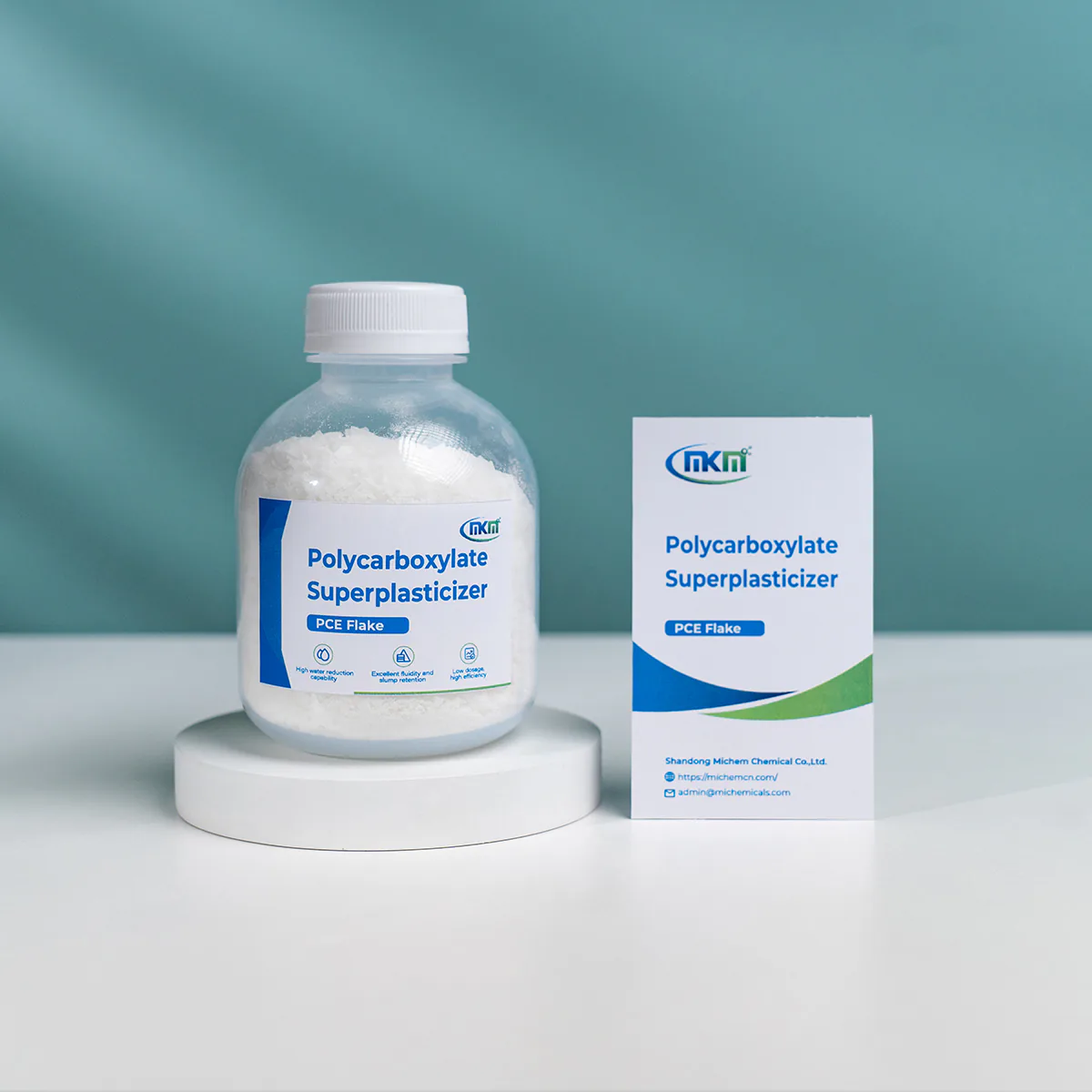
Prepare Your PCE Flake Trial with MICHEM
Planning a new admixture formulation or evaluating a different PCE flake source? Share your intended application, binder system, water source, mixing equipment, target concentration basis and required performance.
Explore MICHEM PCE Flakes and contact MICHEM to discuss the current grade information and sample evaluation requirements.
References
- MICHEM. PCE Flakes: product and process-qualification guidance.
- ASTM International. ASTM C494/C494M-24: public abstract and scope for chemical admixtures for concrete.
- Plank, J. et al. (2009). Effectiveness of Polycarboxylate Superplasticizers in Ultra-High Strength Concrete: The Importance of PCE Compatibility with Silica Fume. Journal of Advanced Concrete Technology, 7(1), 5–12.