
Fiber Balling in Concrete: Causes and Mixing Checks
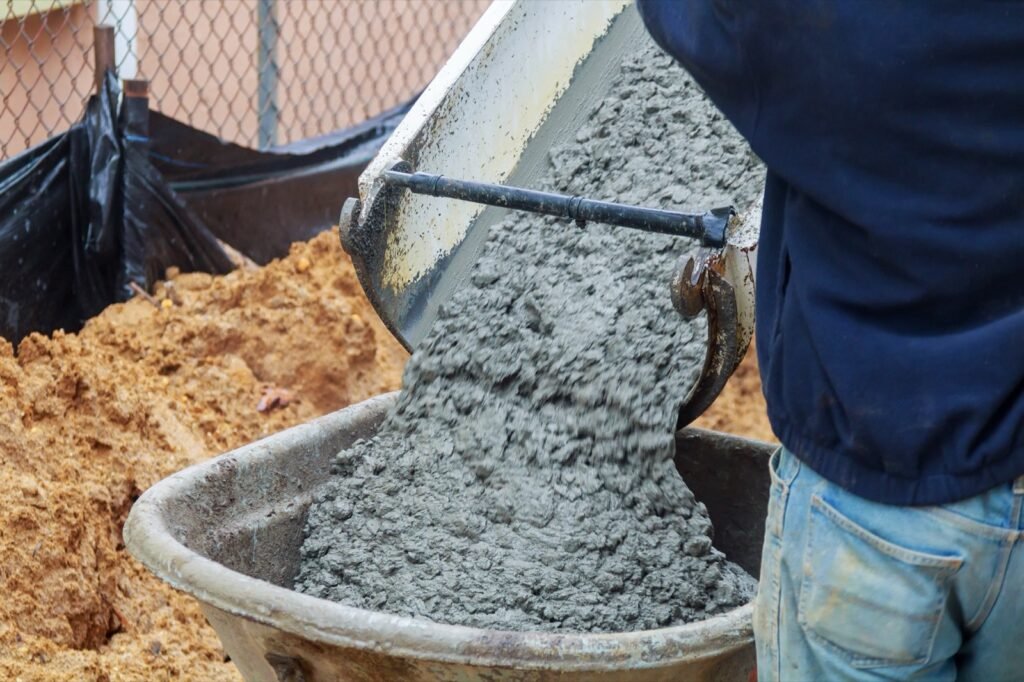
Fiber balling is the formation of concentrated clumps of fibers during concrete batching or mixing. It can be associated with rapid feeding, an unsuitable addition sequence, a mixture that cannot accommodate the selected fibers, or ineffective mixing. The first useful question is when and where the clump was first observed. That observation helps narrow the investigation before another batch is changed. [1][2]
For concrete producers, batching operators and site quality teams, a useful response combines a check of the actual batch record with observations of the material. This guide provides a troubleshooting table, a mixing checklist and a trial record you can adapt to your production process.
The checks focus on conventional wet-mixed concrete. Set the operating conditions and acceptance criteria using the selected fiber’s current instructions, the mixer manufacturer’s guidance and the project specification. Dry-cast, zero-slump and sprayed-concrete processes need their own procedures.
In this guide 7 checks + troubleshooting tables + FAQs
Confirm what you are seeing
Describe the observation before calling it a product defect. Is it a dense fiber-rich lump in fresh concrete, a bag that has not broken down, a supplied bundle that has not separated, or individual fibers visible at the surface?
These observations call for different investigations. A photograph of loose, dry fibers does not establish how they disperse in concrete. Likewise, a few exposed fibers on a finished surface do not, by themselves, prove that the batch contained fiber balls.
Some steel fibers are deliberately supplied in glued bundles that separate during mixing. Bekaert’s published explanation of its glued steel fibers is one example of this delivery format. Check whether a bundle is the intended supply form and how the supplier says it should disperse. [6]

Start an incident record with the batch number, fiber grade, first observed location and time. Photograph the clump with a scale reference, and retain a representative sample under the site’s sampling procedure. Record whether the observation came from loading, the mixer outlet, the truck discharge or a later placing operation.
Identify the fiber family. MICHEM’s polypropylene monofilament fiber and macro-synthetic fiber range include different product forms. Metallic hooked-end steel fiber is a separate family. Use the exact grade and geometry when requesting mixing advice.
MICHEM’s catalog also uses “Synthetic Steel Fiber” for its polymer macrofiber family. Confirm the material identity when this commercial name appears in a quotation or batch record.
Trace where the problem starts
Use the following table to choose the next check. It is an investigation aid: an observation can have more than one cause, so compare it with the batch record and an accepted reference batch. Feeding, mixture composition and equipment condition can interact. [1][3][5]
On smaller screens, scroll within the table to see all columns. Keyboard users can focus the table area and use the arrow keys.
| First observation | Check first | Controlled follow-up |
|---|---|---|
| Fibers collect at the entry point | Feed surges, chute obstructions and the actual addition stage | Observe a trial with the approved feed arrangement and record the addition period. |
| Bags or bundles remain after mixing | Packaging instructions, storage condition and contact with the moving concrete | Confirm the required release mechanism with the supplier before changing the handling method. |
| Clumping appears with unusually stiff concrete | Batch weights, aggregate moisture correction and fresh-concrete consistency | Compare with the qualified mixture; investigate the deviation before adjustment. |
| The problem follows a change in fiber or dosage | Grade, length, geometry, delivered mass and actual batch volume | Recheck the batch calculation and qualify the changed combination. |
| Only particular mixers or load sizes are affected | Mixer identification, operating capacity, blade condition and mixing record | Compare equivalent batches and ask maintenance to inspect the equipment. |
| Discharge contains balls despite a normal slump | Fiber addition and dispersion history | Keep dispersion and consistency as separate checks in the quality review. |
Keep the original record. If the next trial changes the fiber, concrete proportions, feed rate and mixing duration together, it will be difficult to tell which change mattered.
Verify the grade, dose and packaging
Match the material to the approved batch sheet
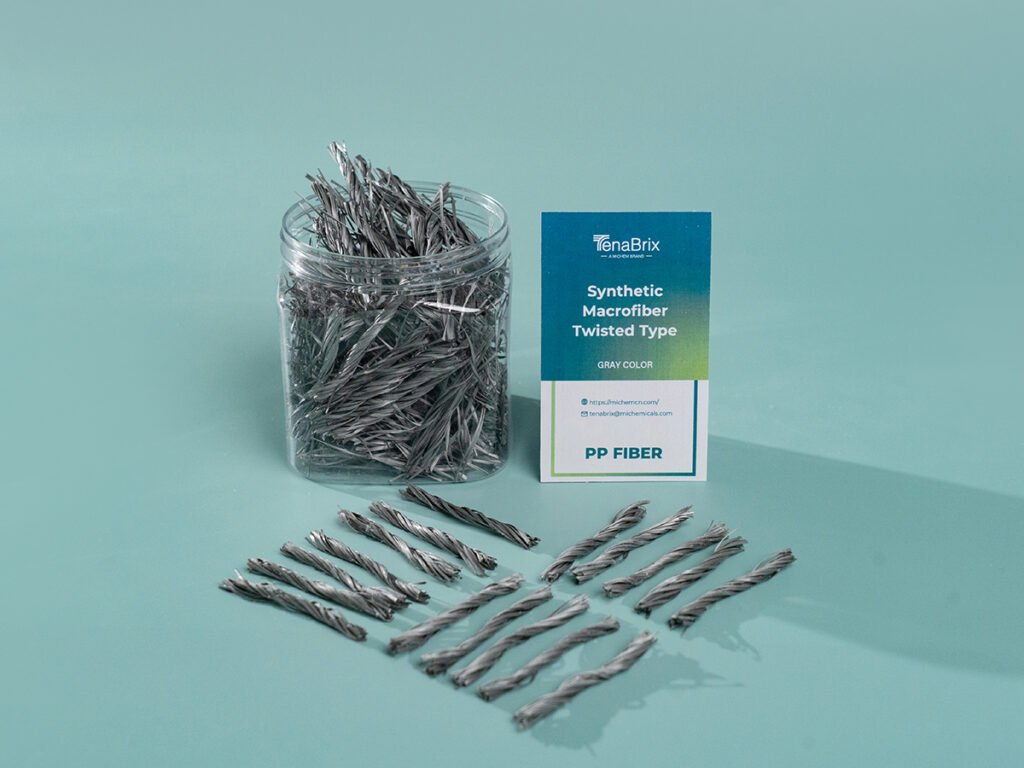
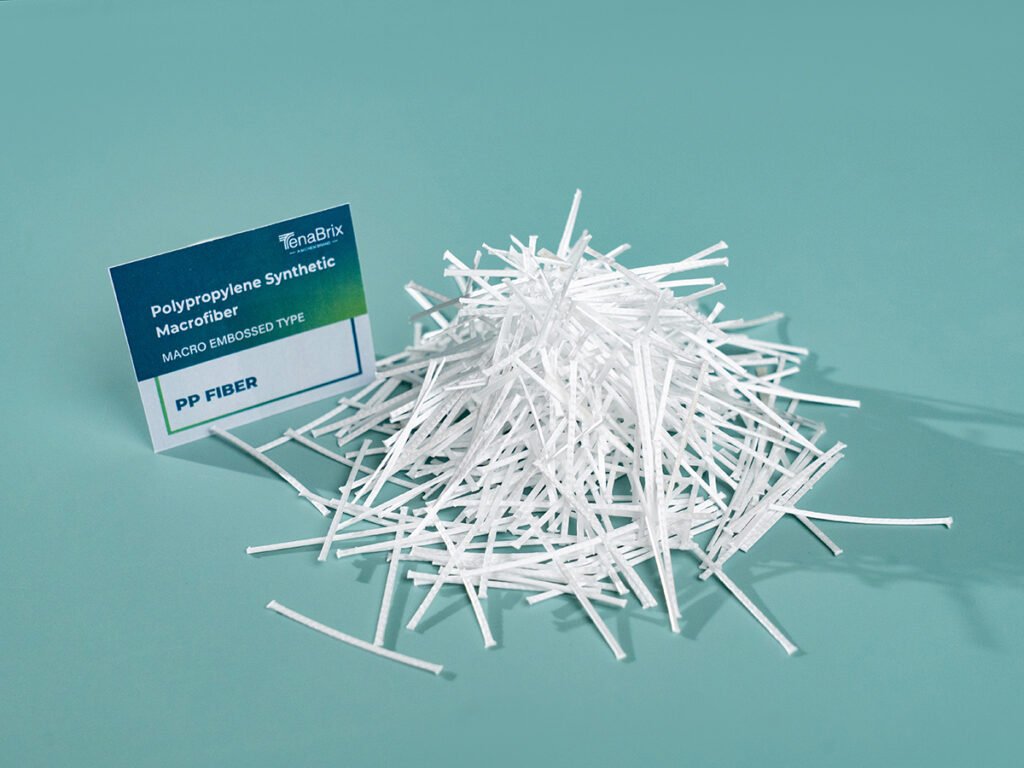
Record the supplier, product name, grade, lot and fiber dimensions. Check that the material delivered is the material qualified in the trial. Review any change in geometry or supply form, including loose fibers, twisted macrofibers, embossed macrofibers or glued steel-fiber bundles.
Do not transfer a successful procedure to a new fiber solely because the bags carry the same broad label, such as “polypropylene fiber.” The Fiber Reinforced Concrete Association identifies fiber characteristics, dosage and mixing system as relevant to the batching procedure. [3]
For micro-synthetic fibers, a high dosage can create a large fiber count and total surface area, making mixing more demanding. For steel fibers, check shape and aspect ratio, meaning length relative to diameter. Glued bundles help with feeding, but that supply form does not eliminate the possibility of balls developing in the concrete. [9][10]
The photographs in this section show twisted macro-synthetic fiber and embossed macrofiber product forms. Confirm the individual grade’s instructions when evaluating either option.
Recalculate the mass for the actual batch
Required fiber mass = specified dosage × actual concrete batch volume.
For example, an illustrative 8 m³ batch at 3 kg/m³ requires 24 kg of fiber. This is a calculation example, not a recommended dosage for a MICHEM product. Check the actual load volume, package mass and dispenser total; a partial load needs its own calculation.
Where the specification uses fiber volume rather than mass, use the correct material density and calculation basis. Equal kilograms of steel and polymer fiber do not represent equal fiber volumes. A change made to improve handling must still meet the project’s required concrete performance.
Confirm how the package should enter the mixer
Establish whether the product is supplied in a bag intended to disperse in concrete, a package that must be opened, or a bulk dispensing format. Do not assume that all paper or plastic packaging belongs in the batch. Some fiber packaging is specifically designed for direct addition; the product instructions determine the method. [3]
Also record damaged or wet packaging and any change from the accepted incoming material. Refer these observations to the supplier before deciding how the material can be used.
Check addition sequence and feed rate
There is no single addition sequence that applies to every fiber. For example, published instructions for one PP monofilament microfiber allow addition with dry aggregates, or later with sufficient mixing, while excluding direct addition into the mixing water. A macro-synthetic fiber bulletin generally recommends a later addition stage but also describes other workable routes subject to mixture and process conditions. [4][5]
Use those differences as a reason to obtain a written procedure for the selected MICHEM grade. The instruction should identify the addition point, material sequence, feed method and mixing stage.
At the next controlled trial, record:
- What was in the mixer when feeding started: aggregates, binder, water and admixtures, including any delayed additions.
- How the fibers entered: loose feed, individual approved bags or an automatic dispenser.
- The addition period: start and finish times, interruptions, surges and material retained in the chute.
- The mixer state: load size and the actual operating mode during and after fiber addition.
Fibers need to enter at a rate the system can distribute. Increasing feeder output without checking dispersion can simply concentrate the material at the entry point. For a dispenser, compare the recorded output with the material actually delivered and follow its calibration procedure. [1][3]
When a fiber is designed for dry addition, follow that route’s instructions. When it requires addition to fresh concrete, establish the specified mixture condition first. Obtain approval before introducing presoaking, manual separation or another handling step that is absent from the qualified procedure.
Check the mixture and effective mixing
Review consistency together with the concrete proportions
A mixture that worked without fibers may need further qualification with the proposed fiber grade and quantity. ACI identifies low paste volume, unfavorable aggregate balance and a non-fluid mixture among the conditions associated with balling. Its guidance also identifies equipment condition and fiber characteristics as factors. [1]
For the investigation, compare the suspect batch with the accepted record: binder and aggregate quantities, moisture corrections, total water, admixture additions, temperature and elapsed time. Use the relevant fresh-concrete tests at agreed stages. A slump result describes consistency; it does not establish the fiber distribution throughout the load.
A water-reducing admixture can be considered when developing a workable mixture, but its grade, dosage and compatibility need trial verification. Euclid’s macrofiber guidance also makes clear that adding water or plasticizer after balls have formed may not resolve the problem. [5]

Count actual mixing, not just elapsed time
Record the time and operating mode after the fibers have entered. Transport agitation and effective mixing serve different purposes. The Fiber Reinforced Concrete Association cautions that road-agitation time should not be counted as the required mixing period. [3]
Confirm the appropriate speed and load range with the mixer manufacturer. A longer timer setting does not demonstrate that the concrete is folding and mixing effectively. Both under-mixing and, for some combinations, over-mixing can cause problems. Adjustments should be tested rather than based on the assumption that more time or greater speed always improves dispersion. [1][2][3]
Ask maintenance to review blade wear, buildup and loading-path condition using the site’s equipment isolation procedure. Keep the mixer identification in the batch record so that recurring equipment-specific problems can be recognized.
For the wider batching and application context, see MICHEM’s ready-mix concrete application page. Confirm the actual plant procedure with the parties responsible for the mixture and equipment.
Respond to a batch that contains fiber balls
Use the project’s nonconformance procedure and bring the observation to the responsible quality personnel before releasing suspect material for placement. Where ASTM C1116/C1116M applies to the supply, its published specification requires the delivered concrete to be free of fiber balls at the designated delivery point. Follow the agreed specification and acceptance process for the project. [7]
The following response checklist helps preserve the information needed for that decision:
- Identify the affected material. Record the batch, quantity already discharged, current location and any placement completed.
- Preserve the evidence. Keep photographs, samples, delivery records and the fiber lot identification.
- Check the permitted action. Ask the responsible quality team whether an adjustment and reassessment are allowed, and which tests or observations are required.
- Document the outcome. Record the authorized action, final decision and any follow-up for material already placed.
Removing a visible ball does not establish the remaining fiber content or its uniformity. Where the specification requires residual flexural performance, a compressive-strength result alone does not establish that requirement. Use the test method designated by the project. [11]
Do not use uncontrolled water addition as a balling remedy. NRMCA explains that permitted jobsite water adjustment must remain within the applicable water-to-cementitious-materials ratio and slump limits, and additions must be recorded. The project may impose further restrictions. Have the concrete producer control any permitted adjustment and the required remixing and testing. [8]
The action for a particular load belongs to the agreed quality process. This guide does not establish a universal repair procedure or a batch-rejection rule for every application.
Verify the next trial and keep a usable record
Before routine production resumes with a changed process, run a representative trial and define what will count as an acceptable result. Use the intended materials, mixer, batch size and addition system. A laboratory result alone cannot confirm the behavior of a different production mixer. ACI recommends pre-project trials to check the combination of mixture, fiber type and dosage. [1][2]
Start with a clear question, such as whether controlling a feed surge improves dispersion while other conditions stay fixed. Record each authorized change separately. Keep the application and performance requirements in place while investigating handling.
On smaller screens, scroll within the table to see all columns. Keyboard users can focus the table area and use the arrow keys.
| Trial record | Information to capture |
|---|---|
| Material identity | Concrete mix ID, fiber grade and lot, dimensions and supply form |
| Quantities | Actual batch volume, target dosage, weighed fiber mass and dispenser record |
| Sequence | Addition point, start and finish times, feed interruptions and other material additions |
| Equipment | Mixer ID, load size, operating mode and effective mixing period |
| Observations and tests | Where and when samples were taken, visible clumps, relevant fresh-concrete results and required performance tests |
| Decision | Acceptance criteria, results, authorized reviewer and the procedure revision approved for production |
Use a representative sampling plan. Looking at one small portion of discharge is a useful observation, but it is insufficient evidence of uniformity throughout an entire load. Repeat the checks required by the agreed qualification and quality plan.
If the trial identifies a workable procedure, make it available to the batching operator, driver and site team as relevant. Record which changes in fiber, concrete materials, equipment or batch size will trigger another review.
Frequently asked questions
Is fiber balling always caused by poor-quality fibers?
No. Investigate the incoming material alongside the dosage, feed arrangement, concrete mixture and mixer record. The first location and timing of the observation help identify which part of the process needs attention. A product change may require a new trial even when both products meet their own specifications.
Should fibers always be added last?
Can more mixing remove every fiber ball?
Can PCE superplasticizer solve fiber balling?
A suitable water-reducing admixture may help develop the required workability during mixture qualification. It cannot be assumed to break apart an existing fiber ball or correct an unsuitable feeding process. Trial the complete mixture and obtain approval for any adjustment to a suspect load. [5][8]
Discuss your fiber mixing trial with MICHEM
Send the fiber grade and lot, dosage, actual batch volume, concrete mix details, mixer type, addition sequence and mixing record. Include photographs and explain when the clumps first appeared. This gives the technical discussion a specific starting point.
If you are selecting a fiber for a new application, ask about the current grade documentation, recommended trial conditions and sample availability. Use the agreed trial to assess mixing and the performance required by your project.
Discuss your fiber mixing trialEmail your mixing details · carrie@michemcn.com